

.jpg)
The Solar Roofers are Nashville solar panel and battery experts focused on one thing for homeowners: building residential solar and backup systems that actually make sense for your house, your bills, and the way power really behaves in Middle Tennessee. We’re not dropping in from out of state with a script, we live here, pay NES and Middle Tennessee Electric bills ourselves, and know exactly how our heat, storms, trees, and grid outages treat Nashville homes.
Whether you live in East Nashville or Inglewood in a 1940s cottage, in Sylvan Park or 12 South in a tall infill, in Green Hills, Belle Meade, or Forest Hills in a larger custom home, or in Bellevue, Donelson, Hermitage, Madison, or Mt. Juliet in a traditional subdivision, we build every residential solar system around your actual roof and load, not a cookie-cutter package. From rooftop solar that quietly pulls down your yearly usage to battery backup that keeps your fridge, lights, Wi-Fi, and comfort systems running when the lights go out, everything we do is tuned for Nashville homes and Nashville utilities.
Our team is local, licensed, and focused on clean, careful installations that respect your roof, your electrical system, and your daily routine. If you’re looking for residential solar and battery in Nashville that you can explain in one sentence., this is what it does for our family, and this is how it was built”, you’re in the right place.
Why Residential Solar Makes Sense for Nashville Homes
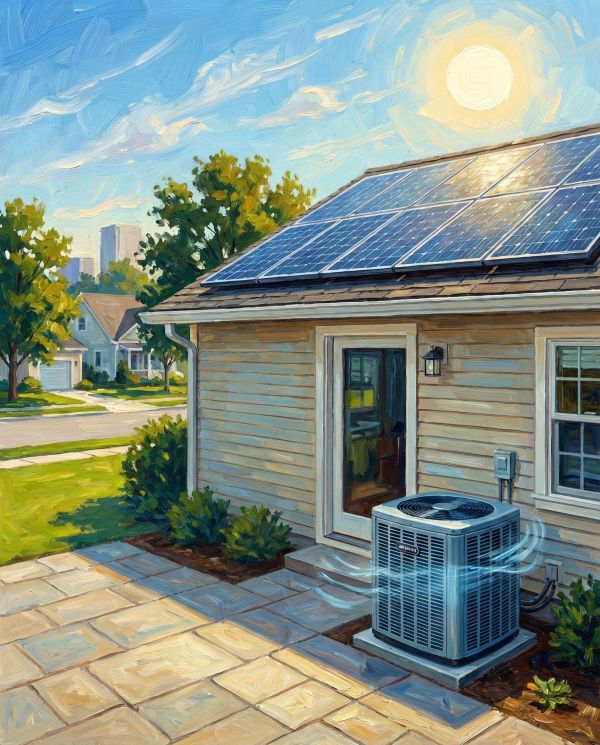
Solar helps blunt high summer bills and long-term rate increases in a city where AC is non-negotiable.
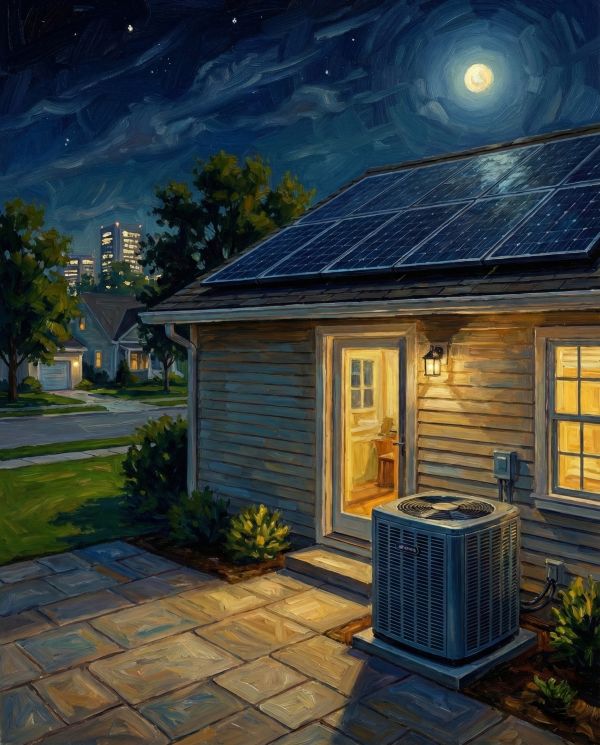
Batteries keep the parts of your life that matter running when the grid goes down.
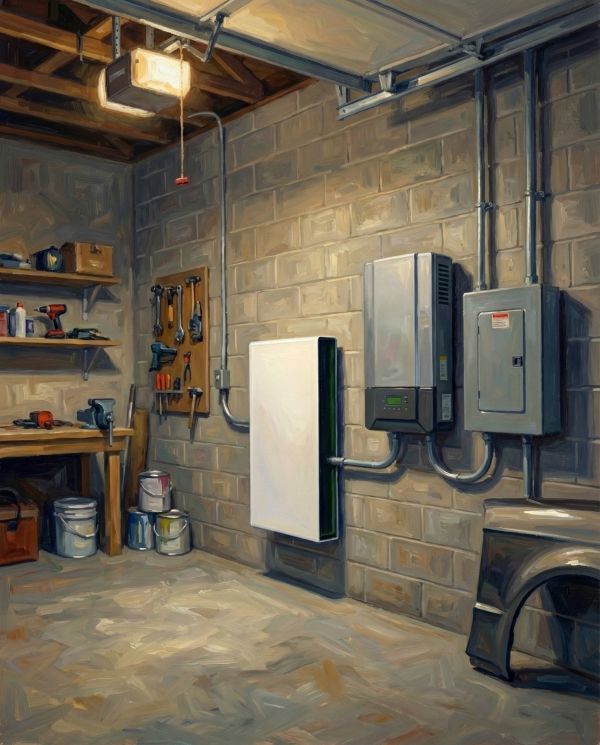
Solar and batteries need to be designed with your existing roof and electrical system in mind.
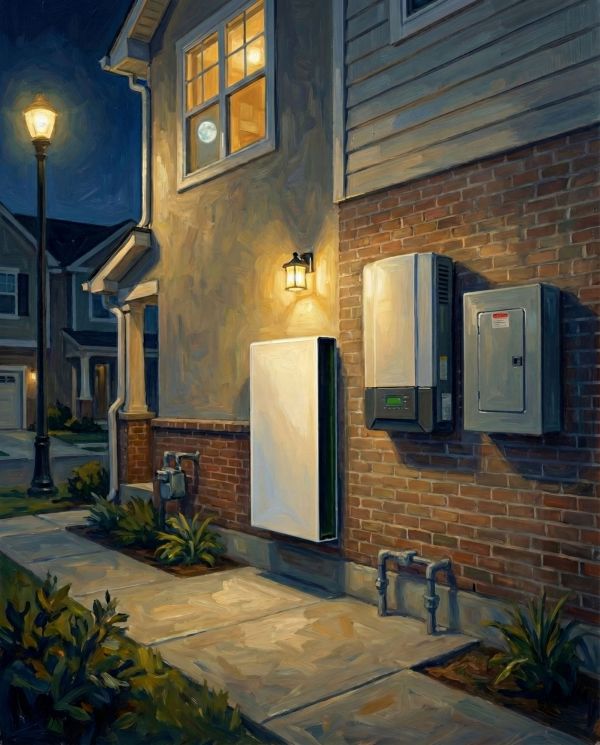
Nashville’s mix of older homes, tall infill, and new builds demands more than a cookie-cutter solar design.
Explore our range of advanced solar Energy products

We design rooftop solar panel systems for Nashville homes based on what your roof and your electric bill actually look like, not on a generic kit. On a simple ranch in Donelson, Hermitage, Madison, or Crieve Hall, that might mean clean, rectangular solar arrays on the best south- and west-facing sections of your roof, with racking tied into solid rafters and setbacks that keep vents, chimneys, and satellite dishes out of the way. On taller infill homes in 12 South, Sylvan Park, East Nashville, or The Nations, we pay close attention to roof access, wind exposure, and fire-code setbacks, and we use the most productive, least shaded planes rather than trying to force panels onto every little facet just to chase a bigger number.
If you have a metal roof in Franklin, Brentwood, Mt. Juliet, or Gallatin, we design solar around that asset instead of fighting it. On standing seam, we use tested seam clamps that don’t require new penetrations through the metal, and we lay out rails and modules so they parallel your seams and ridges neatly. On classic panel metal, we use appropriate brackets and flashings that respect rib spacing and keep water moving exactly as the roof manufacturer intended. In every case, residential solar arrays are engineered to current NEC and local Nashville code, sized to your NES or MTE service, and designed with maintenance and future roof access in mind, so you’re not boxing yourself in the next time someone needs to get on the roof.

We install home battery backup systems for Nashville homeowners who want control when the grid drops, whether they already have solar or plan to add it later. Most families in neighborhoods like Bellevue, Inglewood, East Nashville, and Green Hills aren’t trying to turn their house into a fully off-grid fortress, they just want the important circuits to work when NES or Middle Tennessee Electric goes down. We sit at your main panel with you and decide what “critical” really means for your house: refrigerator and freezer, kitchen outlets, Wi-Fi and home office, a few bedroom and living area circuits, your gas furnace blower or a key mini-split, maybe a well pump or garage door if you need them.
From there, we build a dedicated backup subpanel and connect it to battery systems such as Tesla Powerwall, Enphase, or FranklinWH, sized to your priorities and budget. We program the batteries so you know what comes on automatically, how long those loads are expected to run during a typical Nashville outage, and how your solar array will recharge the batteries if the grid stays down for more than a few hours. We also make sure your system behaves properly with NES or your co-op, so you’re not backfeeding into dead lines or running afoul of utility rules. The end result is simple to explain: “When the neighborhood is dark, these parts of our house still work, and when the sun comes up our roof helps recharge the batteries so we’re not just burning fuel or sitting in the dark.”

If your roof is coming due and you’re serious about solar, the smartest money you can spend in Nashville is getting roof and solar planned together. We see a lot of homes in East Nashville, Sylvan Park, Donelson, and Bellevue where the existing shingle roof is already on its second layer or pushing twenty years, and the last thing you want is to bolt a 25-year solar array on top of something that’s going to need to come off in five. When we handle roof + solar integration, we start by designing the new roof assembly to be solar-ready: new decking where needed, high-temp underlayment, cleaned-up penetrations, and ridge and eave details that will still make sense once racking and wiring are added.
For homes in Green Hills, Forest Hills, Brentwood, Franklin, or Gallatin that are ready for a premium metal roof, we can install standing seam or metal shingles and then design the solar system around seam spacing, ridge lines, and clamp locations so everything works together. On a standing seam roof, that means using non-penetrating clamps and rail layouts that follow the seams and don’t fight the look of the house; on classic panel, it means using the right brackets and closure details so water still behaves properly. On shingle roofs, we sequence the project so all new roofing work is complete before racking goes on, and we avoid covering every square inch with panels so you still have places to stage ladders and access vents and chimneys. You end up with a single, coherent roof + solar system that was designed as one project, not a patchwork.

We expand and service existing residential solar systems around Nashville, even if we didn’t install them originally, because real life changes and systems need to adapt. That might mean adding another string of panels when you bring home an EV in Bellevue or Mt. Juliet, upgrading an older string inverter in East Nashville or Madison to a modern hybrid unit that can support batteries, or integrating storage with an existing array on a home in Franklin, Thompson’s Station, or Nolensville. Before we add anything, we run a health check: we inspect the roof and racking, check wire management and terminations, review monitoring data for underperforming strings or modules, and verify that your main service and subpanels can safely handle the extra capacity.
If the original system was built well and has room to grow, we design the extension to match, new panels that blend visually and electrically with the existing array, updated labelling, and any necessary tweaks to combiners, breakers, or conductors so the system still meets code and manufacturer specs. If we find serious issues, undersized wire, bad roof attachments, unsafe terminations, we’ll tell you that honestly and propose either remediation plus expansion or a more comprehensive redesign. The point is never to “just bolt on a few more panels” and hope for the best; it’s to make sure your Nashville home ends up with a solar and battery system that you can trust for the long term, no matter who touched it first.

Every system we install in Nashville comes with online monitoring so you can see what your solar panels and batteries are doing without having to guess. We set up app and web access for you, usually at the inverter or module-level, so you can see daily, monthly, and yearly production, system status, and any error messages. For homeowners in Green Hills, East Nashville, Sylvan Park, Bellevue, or Franklin, that means you can tell at a glance whether the system is performing as expected, whether shade from that new tree is starting to matter, or whether an inverter or string has stopped pulling its weight.
Our maintenance services are built around catching small issues before they become big losses. On a scheduled or as-needed basis, we can perform on-site checks that include visual inspection of modules, racking, and wiring; torque checks on key fasteners; inspection of roof penetrations and clamps; and targeted cleaning where dirt, pollen, or debris are clearly impacting output. Nashville’s mix of pollen, storms, and tree cover means some arrays will benefit from occasional cleaning and more frequent valley and gutter checks, especially near busy roads or dense canopy. When monitoring flags a problem, an underperforming string in Hermitage, an inverter error in Brentwood, or sudden production drops in Inglewood, we troubleshoot it with data first, then send a tech who knows what they’re looking for. The goal is not for you to babysit your system; it’s for the system to run quietly in the background while someone is actually paying attention to its health over the years.

Financing and incentives are where a good residential solar project in Nashville either clicks into place or falls apart, so we treat this as part of the design, not an afterthought. For most homeowners on NES, Middle Tennessee Electric, or a local co-op, the backbone of the financial picture is the 30% Federal Investment Tax Credit (ITC) plus whatever loan, HELOC, cash, or refinance structure makes sense for your household. We don’t sell the loan, but we do help you size the system in a way that matches your tax appetite and budget: how much ITC you can actually use over the next few years, how a monthly payment compares to your current power bill, and what happens as rates climb.
If you’re in a higher tax bracket in Green Hills or Belle Meade, or running a home business in East Nashville, Sylvan Park, or Brentwood, we’ll talk about how the ITC and potential business use might interact with your CPA’s strategy (you’ll always make the final call with them). For families in Donelson, Hermitage, Madison, or Bellevue using a HELOC or solar loan, we lay out real numbers for different system sizes so you can see where the sweet spot is between upfront cost, monthly payment, and kWh offset. We also keep up with NES, MTE, and TVA program changes, things like EnergyRight, GreenConnect, or any current residential offerings, so if there are rebates, low-interest financing, or green programs you can reasonably qualify for, you hear about them before you sign anything. Our job isn’t to play banker; it’s to make sure the Nashville solar panel and battery system we design slots cleanly into your financial reality, and that you go into the project knowing exactly what you’re getting back in credits, savings, and resilience over the years you plan to live in the home.
How much does a home solar + battery system really cost in Nashville, and what kind of payback can I expect?
There isn’t one number that fits every house, but we can talk ranges that reflect what we actually see on NES and Middle Tennessee Electric homes. A typical rooftop solar system for a Nashville-area house (think 7–12 kW on a primary residence in East Nashville, Sylvan Park, Bellevue, Hermitage, or Mt. Juliet) usually lands somewhere in the low-to-mid tens of thousands before incentives. The 30% Federal Investment Tax Credit (ITC) reduces that by 30% if you have the tax liability to use it, and many homeowners stack that with a HELOC or solar-specific loan so the net monthly cost competes with part of their current power bill. Adding batteries for backup (Tesla, Enphase, FranklinWH, etc.) will increase that number; each battery is a significant piece of hardware, but it also gives you real resilience during NES or MTE outages.
Payback depends on three things: how much power you use (and when), how good your roof is for solar, and what your rates and fees look like under your current tariff. In Nashville we commonly see simple payback in the 8–15 year range on solar-only for good candidates, faster if your usage is high and your roof is excellent, longer if you’re modest on usage or the system has to be smaller. Batteries rarely “pay back” purely in kWh; their value is in keeping things on when the grid is off. We don’t hand you a one-size payback slide. We use your last 12–24 months of NES or co-op bills, run it through your specific design, and show you both the financial side and the comfort/resilience side so you can decide whether the numbers match what you want to do with your house.
Do I need a new roof before putting solar on my Nashville home, or can you use what I already have?
Not every roof is a good solar roof, and we’re honest about that from the start. On a flat TPO or EPDM roof downtown or in MetroCenter, we’re looking at age, membrane condition, deck type, and remaining life. If the roof is within five or so years of replacement, it usually makes more sense to coordinate roof work and solar or use a ballasted system that can be removed when the roof is replaced, rather than bolt 25 years of equipment onto 5 years of roof. On standing seam metal roofs in industrial areas off I-65 or I-24, we’re often in great shape: we can clamp to seams with no new penetrations, and the roof under the array is typically as long-lived as the solar itself.
For older buildings along Nolensville Pike, Charlotte, Gallatin Pike, or in older industrial zones, we check deck capacity and structural loading. Solar is not especially heavy, but we do not guess, we review loads or bring in structural help where necessary. If the answer is “this roof can’t safely support the array you want,” we’ll say that clearly and talk about options like partial arrays, roof upgrades, or carports instead of forcing a project. The goal is a system that the roof can carry comfortably for the long haul, not a system that becomes a roof liability in five years.
What kinds of Nashville businesses and buildings see the best return from commercial solar?
We will never tell you to put 25+ years of equipment on a roof that obviously has five good years left. On a 1960s ranch in Donelson or Madison with two layers of shingles and soft decking around vents, the honest answer is that roof work should come first or be done with the solar. On a newer shingle roof in Bellevue or Mt. Juliet that’s 5–10 years old and in good shape, we can usually install solar with proper flashing and attachments and expect the roof and array to age together. On a standing seam metal roof in Franklin, Brentwood, or Gallatin, you’re in great shape, metal and solar are natural partners, and we can often clamp rails to seams without making new penetrations.
Before we commit to anything, we inspect your roof in person. We look at age, number of layers, shingle condition, soft spots, flashing, and ventilation. If we think you’ve got plenty of life left, we’ll tell you. If we see a roof that should be replaced soon, we’ll say that plainly and give you a combined roof + solar option so you don’t spend money twice. On metal roofs, we verify gauge, seam profile, and fastening so the clamps or brackets we use are appropriate and don’t compromise the roof. The goal is simple: one well-built roof and solar assembly that you can live with for decades, not a solar system sitting on top of a countdown timer.
What happens when the power goes out in Nashville if I have solar panels and batteries?
This is the part a lot of sales pitches gloss over. A standard grid-tied solar system without batteries will shut off when NES or your co-op power goes out, even if the sun is shining. That’s required for safety, your system can’t backfeed lines while utility crews are working on them. To have power during an outage, you need a battery-based system or another form of backup that is wired to keep selected circuits alive while safely isolating from the grid.
With a solar + battery system, we build a dedicated backup panel that feeds the loads you care about most: fridge and freezer, some kitchen and living room outlets, bedroom circuits, Wi-Fi and home office, a gas furnace blower or a mini-split, maybe a well pump or garage door. When an outage hits in East Nashville, Hermitage, Bellevue, or Green Hills, your inverter and batteries detect the loss of grid, open the connection to NES or MTE, and start powering those circuits from your stored energy, usually in a fraction of a second. During the day, your solar array can recharge the batteries and run loads directly; at night, you’re running off stored power only. We size the battery bank and program the system so you know roughly how long it’s designed to run in a typical outage, and we tell you up front when it makes sense to be conservative on usage to stretch runtime over multiple days.
Will solar panels and batteries make my Nashville home look out of place or cause HOA problems?
Done badly, yes. Done right, no—and in many cases, solar can improve how a house presents. Nashville has a wide mix of neighborhoods and expectations: tighter historic-style streets in East Nashville and Sylvan Park, curated aesthetics in Green Hills and Belle Meade, and more flexible subdivisions in Bellevue, Hermitage, Mt. Juliet, and Gallatin. The trick is profile, placement, and color. We align arrays so they sit cleanly within roof planes instead of zigzagging around every vent, we avoid awkward “slivers” of panels whenever possible, and we favor black-framed modules on darker roofs so the array reads as one shape, not a checkerboard.
On the HOA side, most Nashville-area rules are about what things look like, not the underlying technology. Many are stricter on roof color and profile than on whether you have solar at all. Before we submit anything, we’ll help you gather the right materials, elevations, panel layout, color and spec sheets, and photos of similar homes, so your HOA or architectural committee can see the finished look instead of guessing. If they have requirements about visibility from the street or preferred roof faces, we design within those constraints or show you what the trade-offs are. Our job is to deliver a system you can be proud of from the sidewalk and one that your HOA can sign off on because it clearly fits the neighborhood.
What kind of maintenance and monitoring does a home solar system in Nashville actually need?
Solar is not maintenance-free, but it’s closer to your fridge than your car. The electronics have few moving parts, and panels are built to live outside, but they still need some attention to stay at peak performance. In Nashville, the main culprits are pollen, dust, leaves, and the occasional squirrel or raccoon that decides panel wiring looks interesting. We build monitoring into every system, so you and we can see daily, monthly, and annual production, and in many cases module- or string-level data. If a string in Bellevue suddenly drops to half of what its neighbors are doing, or an inverter in Sylvan Park starts throwing errors, we’ll see that pattern before it turns into months of unnoticed lost generation.
Physically, we recommend periodic visual checks and scheduled maintenance: walking the array and roof attachments every year or two, tightening hardware where needed, and cleaning panels when there’s obvious buildup or when monitoring shows a sustained drop not explained by weather. Cleaning is done with soft brushes and deionized water or manufacturer-approved methods, no harsh chemicals or random pressure washing that voids warranties. For most homes in East Nashville, Green Hills, or Brentwood, that adds up to modest, predictable visits rather than constant service calls. If we see something we don’t like, degraded wiring, critter damage, shading changes from new trees, we’ll show it to you, explain the impact, and fix it on a planned visit instead of waiting for the system to fail.
What incentives and financing options are available for residential solar and batteries in Nashville?
Most Nashville homeowners building solar or solar + battery projects lean on a combination of federal incentives and private financing. The big driver is the 30% Federal Investment Tax Credit (ITC), which lets you credit 30% of eligible system costs (panels, inverters, racking, and qualifying batteries) against your federal income tax. If you don’t use it all in the first year, current rules let you roll the remaining credit forward. Tennessee doesn’t currently offer a standalone state income tax credit for residential solar, but you may see other benefits depending on local programs and how your county assesses improvements, your CPA is the one who should make that call with you.
On financing, homeowners around Nashville commonly use a mix of cash, home equity lines of credit (HELOCs), solar-specific loans, or refinance strategies. We’re not a lender, but we do structure system sizes and equipment choices so you can see how a payment would compare to your current NES or MTE usage, and we provide all the documentation your lender or financial advisor needs. For some homeowners in Green Hills, Belle Meade, or Franklin with stronger tax positions, pairing ITC with a shorter-term loan makes sense; for others in Donelson, Madison, or Mt. Juliet, a longer-term solar loan or HELOC is the right fit. We’ll lay out what we see working for homes like yours and help you avoid over-sizing a system just to chase a bigger loan or a prettier proposal slide.

Our Trusted ENergy Technology Partners


.avif)
.png)


.png)

.png)


.png)


