Commercial rooftop · Fyffe
Tri State Poultry Supply: solar project case study
Tri State Poultry Supply is a family-owned poultry equipment and supply business founded in 1993. The company’s project video documents a solar installation. A supply business is not the same as a poultry grow-out farm, and its system should be understood in terms of its own load, service and property. The Metal Roofers’ job record shows an original contract of about $156,000.
Project records and film by The Metal Roofers

- Documented layout
- Rooftop modules shown
- Original gross contract
- About $156,000
- Rated system capacity and offset
- Not verified
Historic project figures are not current quotations. Unknown specifications are excluded.
How to read this project
What the project evidence shows
The film shows rows of solar modules on a rear roof plane at the company’s Fyffe facility. It does not reveal the module count or ratings, inverter schedule, battery configuration, or production.
How a poultry supply business can scope a solar system
Start with the meter that serves the proposed installation and gather both monthly consumption and demand readings, where available. Ask which equipment this meter actually serves and when it operates. A comparable business might have shop, storage or office loads, but the design should use that property’s records rather than an assumption about the industry.
Why battery backup should be a separate decision
If the goal includes resilience, list the equipment that must remain powered, its operating draw, its starting demand and the outage duration you want to cover. That exercise is different from sizing panels for yearly electricity generation. The video does not establish that batteries were included in this installation.
What the original contract establishes
The Metal Roofers’ job record lists approximately $156,000 as the gross contract. Progress billings are not proof of the amount paid. The historical contract is not a quote for another job or evidence of any incentive or electricity savings.
A closer look at the project
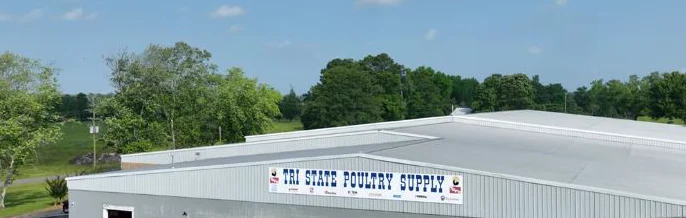
Watch the project film
Questions to ask about a project like this
Was this a solar installation on a poultry farm?
The featured company is Tri State Poultry Supply, a poultry equipment and supply business. Its operating profile should not be treated as interchangeable with a farm’s.
What should an agricultural supplier collect before getting a solar quote?
Start with 12 months of utility bills, meter and electrical-service information, and a good description of when major loads run. If backup power matters, include a separate list of the loads that cannot be interrupted.
How much was the original Tri State solar contract?
About $156,000 according to The Metal Roofers’ job record. That is the historical gross contract, not the amount paid, the net cost after incentives, or a current price.
Sources and evidence
- Tri State Poultry Supply: company history
- The Metal Roofers’ archived job record: original gross contract
- The Metal Roofers’ original project film
Plan your own project
Let’s look at your roof and your power use.
Bring a year of electric bills, any roof work you have planned and the loads you want to keep running. We can talk through rooftop vs. ground mount, array size and whether storage belongs in the plan.
Request a solar consultationMore projects